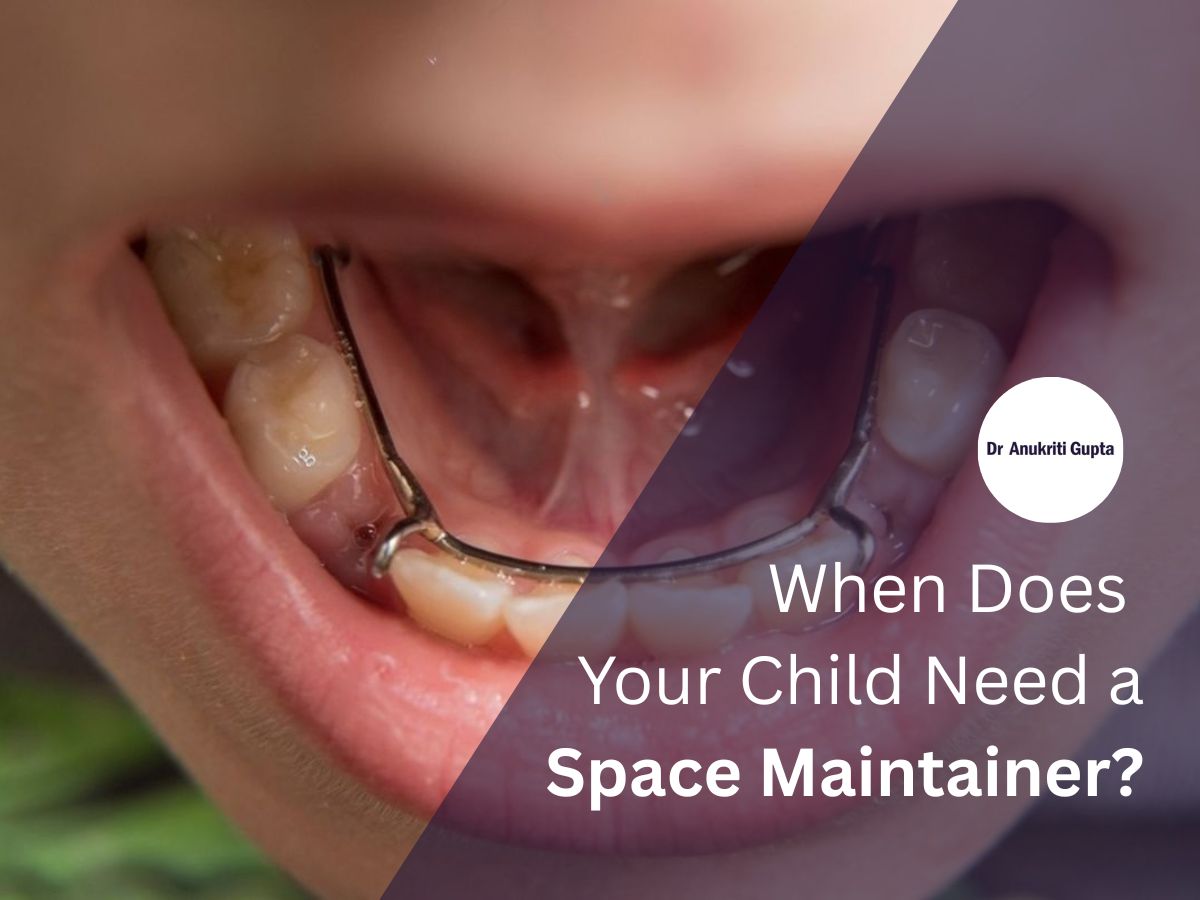
Many parents don’t think much when their child loses a baby tooth early. After all, those teeth were meant to fall out eventually. But when a baby tooth is lost too soon, whether due to decay, an accident, or extraction, it can cause serious problems for the new tooth growing underneath. When a gap is left open for too long, nearby teeth may slowly move into that empty space. This can block the right path for the permanent tooth, causing crowding, misalignment, or bite issues. To prevent such problems, space maintainers pediatric dentistry are often used. Space maintainers are small dental appliances that help hold space for permanent teeth. It makes sure the permanent tooth has enough room to grow in the correct position. Without this support, surrounding teeth may drift into the gap, which can later lead to crowding or bite problems. These appliances are custom-made for each child and are usually made from metal or acrylic. Depending on the need, they can be either fixed (cemented in place) or removable (similar to retainers). By keeping the space intact, space maintainers make sure your child’s adult teeth grow in properly, helping maintain a healthy bite and confident smile. Once the permanent tooth starts to appear, space maintainers are gently removed. Learn more about the role of space maintainers in pediatric dentistry, how they play an important role in preventing space loss and keeping children’s teeth aligned as they grow. There are different types of space maintainers in pediatric dentistry, and the choice usually depends on the child’s age, the number of missing teeth, and how soon the permanent tooth is expected to appear. Some of the commonly used ones include: Space maintainers are part of our Preventive Dental Treatments for Children designed to support proper tooth alignment and jaw growth. Not every case of early tooth loss requires a space maintainer. In most situations, these appliances are needed only when a baby tooth is lost before the permanent tooth underneath is ready to emerge. Space maintainers are generally recommended in the following situations: When a child first gets a space maintainer, it’s common to feel some discomfort or mild soreness as they adjust. This usually settles within a few days. Parents can follow these simple guidelines to support comfort and oral health: With proper care, space maintainers can comfortably guide the growth of permanent teeth and help preserve a healthy, well-aligned smile. Space maintainers in pediatric dentistry play a vital role in ensuring proper tooth alignment and healthy oral development when a baby tooth is lost early. Under the expert care of Dr. Anukriti Gupta, pediatric dentist in Gurgaon, each child receives gentle, customized treatment designed to guide permanent teeth into their correct position and maintain a healthy smile. If your child has lost a baby tooth prematurely or you’ve noticed shifting teeth, it’s best to schedule a pediatric dental consultation with Dr. Anukriti Gupta for compassionate care and expert guidance to protect your child’s developing smile. What Are Space Maintainers?
Different types of space maintainers in Pediatric Dentistry
When Are Space Maintainers Recommended?
What Should Parents Know About the Process and Care of Space Maintainers?
Conclusion: The Importance of Space Maintainers in Pediactric Dentistry