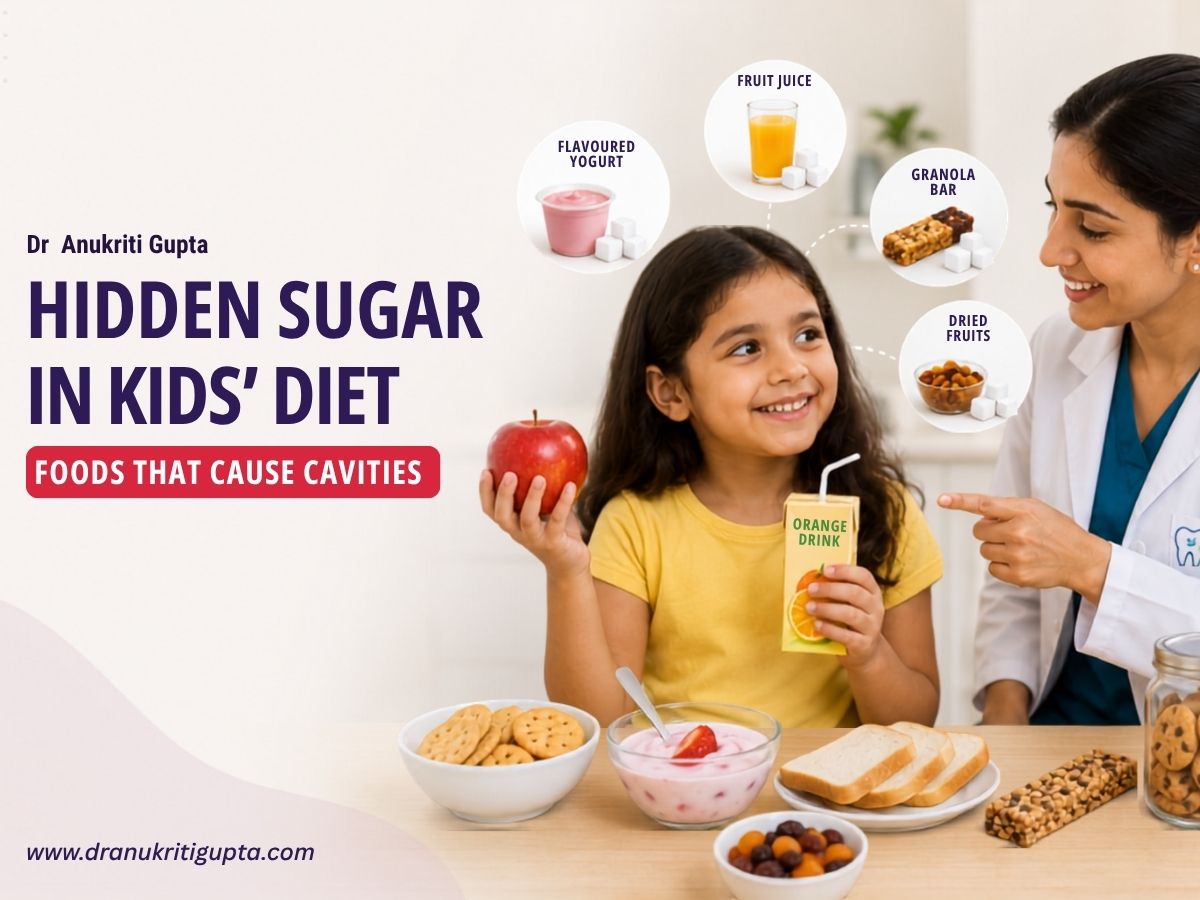
Many parents are surprised when their child develops a cavity despite eating very little candy. The truth is, sugar isn’t only in chocolates and sweets. Everyday foods that seem healthy can quietly expose children’s teeth to sugar all day long. You brush their teeth morning and night. You’ve cut down on chocolates and biscuits. Yet the dentist finds another cavity — and you’re left wondering what you’re doing wrong. The answer is often hidden sugar. Everyday foods marketed as healthy – Fruit juice, flavored milk, granola bars, crackers, even bread — all can feed cavities‑causing bacteria just as effectively as a bar of chocolate. The difference is, nobody warns you about them. Spotting these hidden sugars helps parents make smarter choices and protect their child’s smile. The bacteria in your child’s mouth is what causes tooth decay, not sugar itself. When sugar gets to the teeth, Streptococcus mutans bacteria eat it and create acid. Tooth enamel is gradually dissolved by that acid, creating a hollow. Children’s cavities are brought on by oral bacteria that consume sugar and generate acid. Over time, tooth enamel is eroded by this acid. Any food that turns into sugar and remains on the teeth can lead to decay, regardless of whether the sugar originates from fruit juice or candy. Both the quantity and the frequency of exposure are important. A child who sips juice slowly over an hour causes more enamel damage than one who drinks it quickly and rinses — and the early signs of that damage are often invisible without a dental check. Every sip resets the acid clock. Many common foods contain added or natural sugars that stay on teeth longer than parents realize. Some of the most common cavity-causing foods include: A 200ml pack of “100% natural” apple juice contains around 20–24g of sugar — roughly 5–6 teaspoons. It has almost no fibre to slow the sugar’s impact, and it coats every tooth surface with each sip. Packaged coconut water, mango drinks, and sports drinks fall in the same category. What to do instead: Offer whole fruit over juice. If juice is unavoidable, dilute it half-and-half with water and serve it at mealtimes, not as a between-meal drink. This surprises most parents. Plain crackers, white bread, and refined rice break down into simple sugars very quickly in the mouth. They also stick between teeth and in fissures — where bacteria are hardest to remove. A packet of salted crackers after school can be more damaging than a small sweet. What to do instead: Choose whole grain versions where possible. Make sure your child brushes or at least rinses after starchy snacks. Plain milk is excellent for teeth. But strawberry milk, chocolate milk, and flavoured yoghurt pouches often contain 10–18g of added sugar per serving. They’re also thick and sticky, which means they cling to teeth longer. What to do instead: Choose plain yoghurt and add fresh fruit at home. You control the sugar — and real fruit has far less of it than flavoured versions. Most granola bars marketed at children are held together with honey, glucose syrup, or jaggery. Many contain 15–20g of sugar. They’re also chewy and sticky, which means they wedge between teeth and stay there long after the snack is over. Dried fruit concentrates all the sugar from the original fruit into a smaller, stickier form. A handful of raisins contains as much sugar as several fresh grapes, packed into a chewy texture that adheres directly to tooth surfaces. They’re a common addition to school tiffins — and one of the biggest hidden cavity drivers paediatric dentists see regularly. The issue is often not the food itself but how frequently it is consumed throughout the day. Yes. Some foods marketed as healthy can still be problematic for teeth. Examples include: These foods often stick to teeth and provide fuel for cavity-causing bacteria. Sticky foods tend to remain on the teeth longer. Common examples include: Because they stay in contact with teeth for extended periods, they can increase the risk of cavities if oral hygiene is not maintained. If your child develops cavities despite regular brushing, the likely cause is frequent sugar exposure from non-obvious foods — juice, crackers, dried fruit, or flavoured dairy. Check the nutrition label for total sugars and watch how often these foods are given between meals, not just the total daily amount. The early signs of tooth decay in children are often invisible until a dentist catches them — which is exactly why routine check-ups for kids’ oral health exist. You don’t need to overhaul your child’s entire diet. Three targeted changes make a significant difference: 1. Timing over quantity. Serve sweet or starchy foods at mealtimes, not as between-meal snacks. Saliva production is higher during meals and neutralises acid faster. 2. Rinse or brush after sticky snacks. If your child has a granola bar or dried fruit after school, follow it with water or brush within 30 minutes. This removes the residue before bacteria can process it into acid. These are the kind of daily habits that prevent cavities in kids — small changes, consistent practice. 3. Read the label. Check “total sugars” per serving, not just “added sugars.” For snacks, aim for under 5g per serving where possible. Anything above 10g should be an occasional treat, not a daily staple. 4. Ask about a fluoride treatment or dental sealant. If your child is prone to cavities despite good habits, professional fluoride treatment can strengthen enamel and make teeth more resistant to acid attack. Dental sealants physically block the deep grooves in molars where decay starts most often. Both are quick, painless, and preventive — far simpler than treating a cavity that’s already formed. Parents do not need to eliminate all treats. Instead, focus on foods that support oral health. Good options include: These foods are less likely to stick to teeth and help support healthy enamel. Flavored yogurts, fruit juices, breakfast cereals, and packaged snack bars are among the most common hidden sources of sugar in children’s diets. Yes. Cavities can develop from any food or drink containing sugar, including healthy-looking snacks and beverages consumed frequently throughout the day. Fruit juice may contain vitamins, but it still contains sugar and acids that can contribute to tooth decay if consumed frequently. Most children benefit from a dental checkup every six months to monitor oral health and identify early signs of tooth decay. Early-stage decay (a white spot lesion) can be reversed with fluoride and improved diet. Once a cavity has formed through the enamel, it requires treatment — a filling or, if deeper, a baby root canal treatment. Fresh fruits, vegetables, cheese, unsweetened yogurt, cucumber, carrot stick, plain water, and whole foods are generally better choices than processed snacks with added sugars. Limiting sugary snacks, encouraging water consumption, maintaining twice-daily brushing, and scheduling preventive dental visits are effective ways to reduce cavity risk. Brushing is important, but frequent sugar exposure, poor snack choices, hidden sugars, and inconsistent flossing can still contribute to tooth decay. Many cavity problems begin with everyday eating habits rather than excessive candy consumption. By understanding hidden sugars and making informed food choices, parents can significantly reduce their child’s risk of tooth decay. For families in Sector 84, Sector 85, Sector 90, Sector 92, Sector 95, Sector 102, Dwarka Expressway, and New Gurgaon, preventing dental care plays an important role in maintaining healthy smiles throughout childhood. Regular checkups, healthy dietary habits, and early intervention can help children avoid unnecessary dental problems and enjoy stronger, healthier teeth. If your child gets recurring cavities, has sensitivity, or you simply haven’t had a dental check-up in the last 6 months — book an appointment with Dr. Anukriti Gupta. With clinics at Sector 84 (Elan Miracle Mall) and Sector 102 (Satya The Hive, Dwarka Expressway), she provides gentle, expert paediatric dental care for children across New Gurgaon.Why Does Sugar Actually Cause Cavities in Children?
What Foods Cause Cavities in Children Besides Candy?
Fruit juice and flavoured drinks
Crackers, bread, and white rice
Flavoured milk and yoghurt
Granola bars and “healthy” snack bars
Dried fruits — raisins, dates, and dried mango
Can Healthy Snacks Also Cause Cavities?
Which Healthy Snacks Are High in Hidden Sugar?
Why Are Sticky Foods More Harmful Than Chocolate?
What Foods Stick to Children’s Teeth?
How Can Parents Tell If Hidden Sugar Is Damaging Their Child’s Teeth?
What Can Parents Do Right Now to Reduce Hidden Sugar Damage?
What Are the Best Tooth-Friendly Snacks for School Lunchboxes?
Frequently Asked Questions
What is the biggest hidden source of sugar in a child’s diet in India?
Can children get cavities without eating candy?
Is fruit juice healthier for teeth than soft drinks?
How often should children have dental checkups?
Can a cavity from hidden sugar be reversed?
What snacks are safest for children’s teeth?
How can Gurgaon parents prevent cavities in school-going children?
Why does my child keep getting cavities despite brushing?
Supporting Healthy Smiles for Families in New Gurgaon