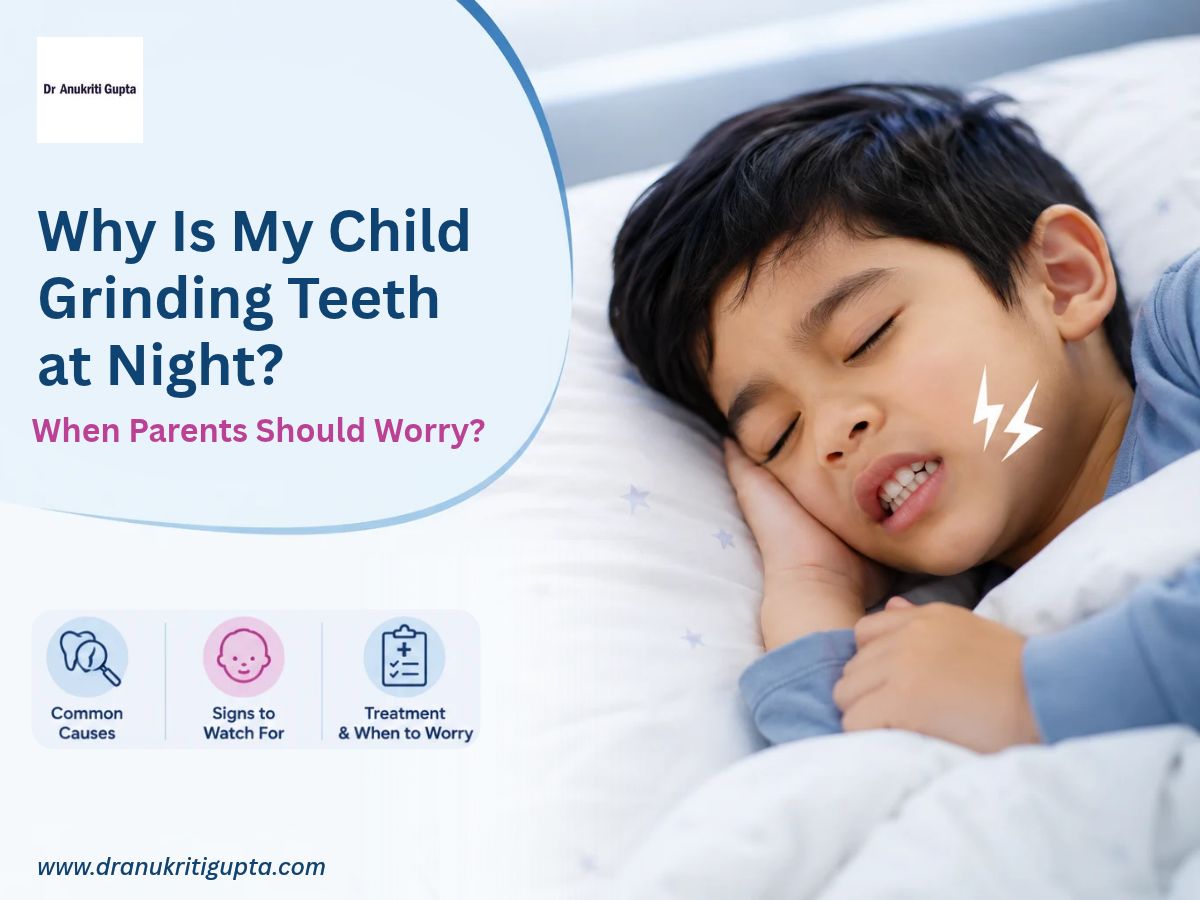
It’s natural to worry if you notice your child grinding their teeth at night. You may wonder if it’s a temporary habit or a sign of an underlying dental issue. People of any age can grind or clench their teeth while asleep without being fully aware of it. Teeth grinding in children, also called bruxism, is relatively common. Some children may grind their teeth occasionally without experiencing any problems, while persistent or severe grinding can lead to tooth wear, jaw discomfort, headaches, or other dental concerns. So, why does your child grind their teeth at night, and when should you consult a dentist? In this guide, we explore the common causes, signs, possible effects, and treatment options for teeth grinding in kids. Teeth grinding, or bruxism, is the repeated clenching or grinding of the teeth. It can happen while a child is awake or asleep. When it happens during sleep, it is known as sleep bruxism. Children may grind or clench their teeth without being aware of it. In fact, parents are often the first to notice the habit because of the grinding or clicking sounds during the night. However, some children may have sleep bruxism without making noticeable sounds. Parents may notice: Not every child who grinds their teeth will develop these symptoms. However, if you notice persistent teeth grinding in your child, particularly along with tooth wear or pain, should be discussed with a pediatric dentist. There isn’t always one specific reason why a child grinds or clenches their teeth during sleep. Teeth grinding in kids, or bruxism, can be associated with several factors, including emotional stress, changes in the teeth and jaws, and certain sleep-related issues. In some children, however, the exact cause may not be identifiable. Stress and anxiety may play a role in sleep bruxism in children. Changes in a child’s routine, schoolwork, separation from parents, family changes, or other sources of worry may affect sleep and lead to nighttime grinding. This doesn’t mean that every child who grinds their teeth is stressed. However, if grinding appears around the same time, it is worth paying attention to. Young children may grind their teeth during periods of teething or tooth eruption. Changes in the mouth can create unfamiliar sensations, and some children may clench or move their teeth against each other. For many children, this may be temporary and may change as their teeth and jaws continue to develop. The way the upper and lower teeth come together may also play a role in some children. A pediatric dental examination can help identify any noticeable concerns with your child’s teeth, bite, or jaw development. Teeth grinding can occur alongside certain sleep-related problems. If your child also snores regularly, breathes through their mouth, has restless sleep, or frequently wakes during the night, let their dentist or healthcare professional know. These symptoms do not necessarily mean that your child’s teeth grinding is caused by a sleep disorder, but they may be important when evaluating the overall picture. Bruxism can occur at different stages of childhood. Younger children may experience grinding around the time their teeth are developing, while older children may experience it as their baby teeth are replaced by permanent teeth. The frequency of teeth grinding can also change as a child grows. In some cases, it may reduce or stop without specific treatment. Bruxism can have multiple contributing factors, and sometimes the exact cause cannot be identified. That is why it is important not to assume that teeth grinding is caused by a single factor. If your child grinds their teeth frequently or you notice signs such as tooth wear, sensitivity, jaw discomfort, or headaches, a child dentist specialist in Gurgaon can evaluate their oral health and determine whether any further care is needed. Teeth grinding may not always be easy to notice, especially when it happens quietly during sleep. Some children grind their teeth loudly enough for parents to hear it, while others may grind quietly, making the habit harder to notice. Possible signs of child grinding teeth while sleeping include: It is important to remember that not every child with sleep bruxism will experience noticeable symptoms. In some cases, signs such as tooth wear may only be identified during a dental examination. Regular pediatric dental check-ups can therefore help identify tooth wear or other changes early. If you notice your child frequently grinding their teeth along with tooth sensitivity, jaw pain, morning headaches, or difficulty chewing, take them to a pediatric dentist. You should also seek professional advice if their sleep is disturbed or they seem unusually tired during the day. At Dr. Anukriti Gupta’s pediatric dental clinic in Gurgaon, your child’s teeth, bite, jaw development, and overall oral health can be assessed to determine whether the grinding needs monitoring or further dental care. Treatment for bruxism in children depends on the underlying factors and whether the grinding is causing problems. If the grinding is mild and there are no signs of dental damage or discomfort, your dentist may suggest monitoring it during routine visits. If stress, anxiety, sleep problems, or another issue may be contributing to the grinding, addressing that factor can be an important part of management. Parents can support a calm bedtime routine by: If teeth grinding is causing significant tooth wear or other dental concerns, your child’s dentist may recommend an appropriate treatment plan. A night guard or oral appliance should not be purchased without professional evaluation. Children’s jaws and teeth are still developing, so any dental appliance should be recommended and monitored by a qualified dental professional. Teeth grinding can happen in toddlers and young children, especially during dental development stages. If your toddler grinds occasionally without pain, tooth damage, or other symptoms, your child’s dentist may simply recommend monitoring the habit. Teeth grinding in children can have several causes, including stress, tooth eruption changes, bite-related factors, or sleep-related issues. Sometimes, no single cause can be identified. Occasional grinding may not cause problems. However, frequent or forceful grinding can contribute to tooth wear, sensitivity, jaw discomfort, and other issues, so persistent symptoms should be evaluated by a pediatric dentist. Some children stop grinding as they grow. Whether treatment is needed depends on how often it occurs and whether it’s affecting the teeth, jaw, sleep, or comfort. Stress and anxiety may contribute to grinding in some children. If grinding starts or worsens during a stressful period, parents should discuss concerns with their child’s dentist. Frequent and forceful grinding can wear down or damage baby teeth. If you notice flattened, chipped, or unusually worn teeth, consult your child’s dentist. Not every child with bruxism needs a night guard. Because children’s teeth and jaws are developing, a dental professional should decide if an oral appliance is appropriate. Teeth grinding can be a temporary part of childhood, but it is worth paying attention to when it becomes frequent or starts affecting your child’s comfort or dental health. Instead of trying to stop the habit on your own, start by understanding what may be contributing to it. Every child is unique, so the right approach may range from simply monitoring the habit to addressing an underlying dental issue. If your child’s teeth grinding is persistent, a professional dental assessment can help determine whether any additional care is needed. For personalized guidance on your child’s oral health, Dr. Anukriti Gupta, a leading kids dentist in Gurgaon, can evaluate their dental development and recommend the appropriate next steps. What is Teeth Griding (Bruxism) in Children?
Why Does My Child Grind Their Teeth at Night?
1. Stress and Anxiety
2. Teething and Tooth Development
3. Changes in the Bite
An unusual bite or changes associated with tooth eruption can sometimes make a child more likely to clench or grind.4. Sleep-Related Factors
5. Age and Development
6. Other Factors
Signs Your Child May Be Griding Their Teeth at Night
When Should You Take Your Child to a Dentist?
How Is Bruxism in Children Treated?
1. Observation and Regular Monitoring
2. Addressing Contributing Factors
3. Dental Treatment
Teeth Griding at Night in Toddlers: Should You Worry?
However, frequent grinding, noticeable tooth wear, pain, or concerns about your child’s sleep are important reasons to seek professional guidance. FAQs About Teeth Grinding in Kids
Q1. Why does my child grind their teeth while sleeping?
Q2. Is teeth grinding a serious problem?
Q3. Do children outgrow teeth grinding?
Q4. Can stress cause teeth grinding in children?
Q5. Does teeth grinding damage baby teeth?
Q6. Does my child need a night guard for teeth grinding?
Final Thoughts