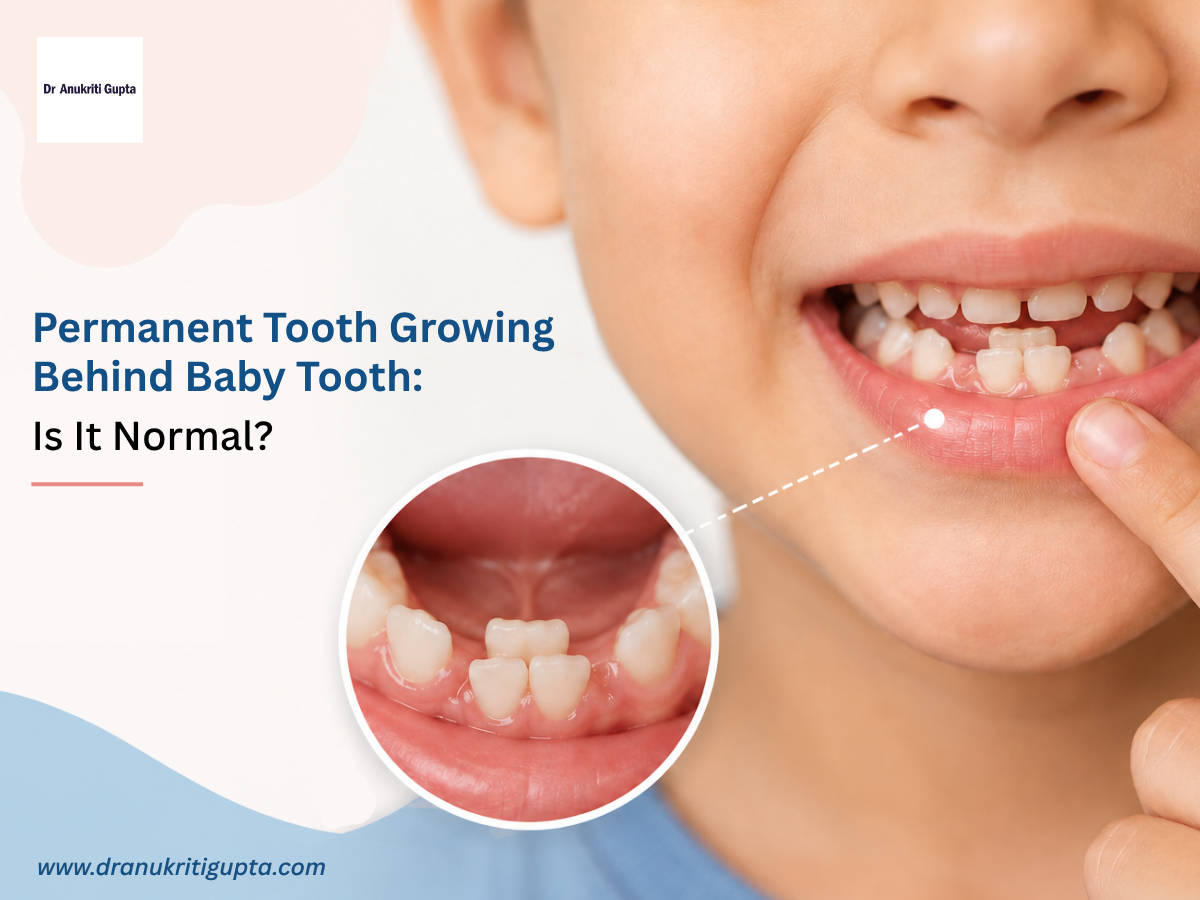
You notice something unusual when your child smiles: a new, permanent tooth seems to be coming in behind a baby tooth that hasn’t fallen out yet. Naturally, you may wonder, “Is this normal? Does my child need treatment?” In many children, this is a common part of tooth eruption and is sometimes called “shark teeth” because the child may temporarily appear to have two rows of teeth. The term may sound alarming, but in most cases, it is not an emergency. Normally, permanent teeth develop underneath the baby teeth. As the permanent tooth moves upward, the baby tooth becomes loose and eventually falls out. Sometimes, however, the permanent tooth begins to appear behind the baby tooth, particularly around the lower front teeth. There are several reasons this can happen: Sometimes, a permanent tooth may erupt slightly behind the baby tooth instead of emerging directly underneath it. The baby tooth may not have become loose enough to fall out when the permanent tooth starts erupting. If there isn’t enough room in the dental arch, the permanent tooth may erupt behind the baby tooth or in a slightly different position. If a baby tooth is lost too early, the surrounding teeth can sometimes shift into the empty space, leaving less room for the permanent tooth. In such cases, a dentist may recommend a space maintainer to help preserve the available space. Every child develops at a different pace. A permanent tooth appearing behind a baby tooth does not necessarily mean there is a problem. “Shark teeth” is a common nickname for a situation where a child has baby and permanent teeth visible at the same time, creating the appearance of two rows of teeth. The name comes from the way sharks can have multiple rows of teeth. Although the appearance can be surprising for parents, shark teeth are relatively common in children, particularly when the lower front permanent teeth are erupting. In many cases, once the baby tooth falls out, the permanent tooth gradually moves forward into a more appropriate position. In many cases, yes. If the baby tooth is already becoming loose and the permanent tooth has just started appearing, you may simply need to monitor it. Once the baby tooth falls out, the permanent tooth can often move forward naturally into a better position. However, every child is different. The position of the permanent tooth and the amount of available space can affect how it develops. This is one of the most common questions parents ask. If the baby tooth is very loose and naturally ready to fall out, it may come out on its own. However, parents should avoid forcefully pulling out a baby tooth simply because they can see the permanent tooth behind it. If the baby tooth is still firmly attached, painful, or shows no sign of becoming loose, it is better to have your child’s teeth examined by a pediatric dentist. Learn more about when it is safe to remove a baby tooth at home and when professional removal may be needed. While many cases resolve on their own, some situations may need professional attention rather than a wait-and-watch approach: In these cases, a pediatric dentist can examine your child’s teeth and determine whether the tooth should be monitored or needs treatment. If necessary, a dental X-ray may also be recommended to check the position and development of the permanent tooth. In many cases, a permanent tooth can gradually move into a better position after the baby tooth falls out, especially when there is enough space in the mouth. However, this does not happen in every child. If the tooth remains out of position, appears crowded, or there is not enough space for it to align properly, a pediatric dentist can assess whether further monitoring or treatment is needed. If you notice a permanent tooth coming in behind a baby tooth, there is usually no need to panic. Here are a few things you can do: Stay Calm: This can be a normal part of your child’s tooth eruption process. Don’t Force the Baby Tooth Out: Let the baby tooth loosen naturally. Avoid pulling a tooth that is not naturally ready to come out. Maintain Good Oral Hygiene: Continue brushing your child’s teeth twice a day with an age-appropriate amount of fluoride toothpaste. Gently clean around both the baby and permanent teeth. Keep an Eye on the Teeth: Check whether the baby tooth is becoming loose and whether the permanent tooth is gradually moving into a better position. Consult a Pediatric Dentist if You’re Concerned: A pediatric dentist can tell you whether the tooth needs treatment or simply observation. It can be. This is a common eruption pattern in children and is often referred to as “shark teeth.” However, the position of the teeth and whether the baby tooth is loose should be evaluated if there is any concern. In many cases, the permanent tooth gradually moves forward after the baby tooth falls out. However, this depends on the child’s available space and tooth alignment. No. Avoid forcefully pulling a baby tooth that is not naturally loose. Consult a pediatric dentist if you are concerned. Not necessarily. Many cases resolve naturally after the baby tooth falls out. Your dentist can assess whether braces or other orthodontic treatment is required. Seeing a permanent tooth appear behind a baby tooth can be worrying, but it does not always mean there is a dental problem. In many children, especially when the baby tooth is already loose, the situation resolves naturally as the baby tooth falls out and the permanent tooth gradually moves into position. The important thing is to avoid pulling the baby tooth unnecessarily and keep an eye on how the teeth are developing. If you notice pain, persistent baby teeth, or significant crowding, a pediatric dental evaluation can help determine the right next step. If you are looking for a child dentist specialist in gurgaon to evaluate your child’s tooth eruption and overall dental development, an early consultation can provide reassurance and help you understand whether the tooth needs monitoring or treatment. Why Is My Child’s Permanent Tooth Coming in Behind the Baby Tooth?
1. The Permanent Tooth is Following a Different Eruption Path
2. The Baby Tooth Hasn’t Fallen Out Yet
3. Limited Space or Crowding
4. Normal Variation in Tooth Development
What Are “Shark Teeth” in Children?
Is it Normal to Have Two Teeth in the Same Spot?
Should You Pull Out the Baby Tooth?
When Should You Take Your Child to a Pediatric Dentist?
Can the Permanent Tooth Move Into the Correct Position on Its Own?
What Can Parents Do at Home?
Frequently Asked Questions
Q1. Is it normal for a permanent tooth to grow behind a baby tooth?
Q2. Will the permanent tooth move forward after the baby tooth falls out?
Q3. Should i remove my child’s baby tooth at home?
Q4. Do shark teeth mean my child needs braces?
What Parents Need to Know