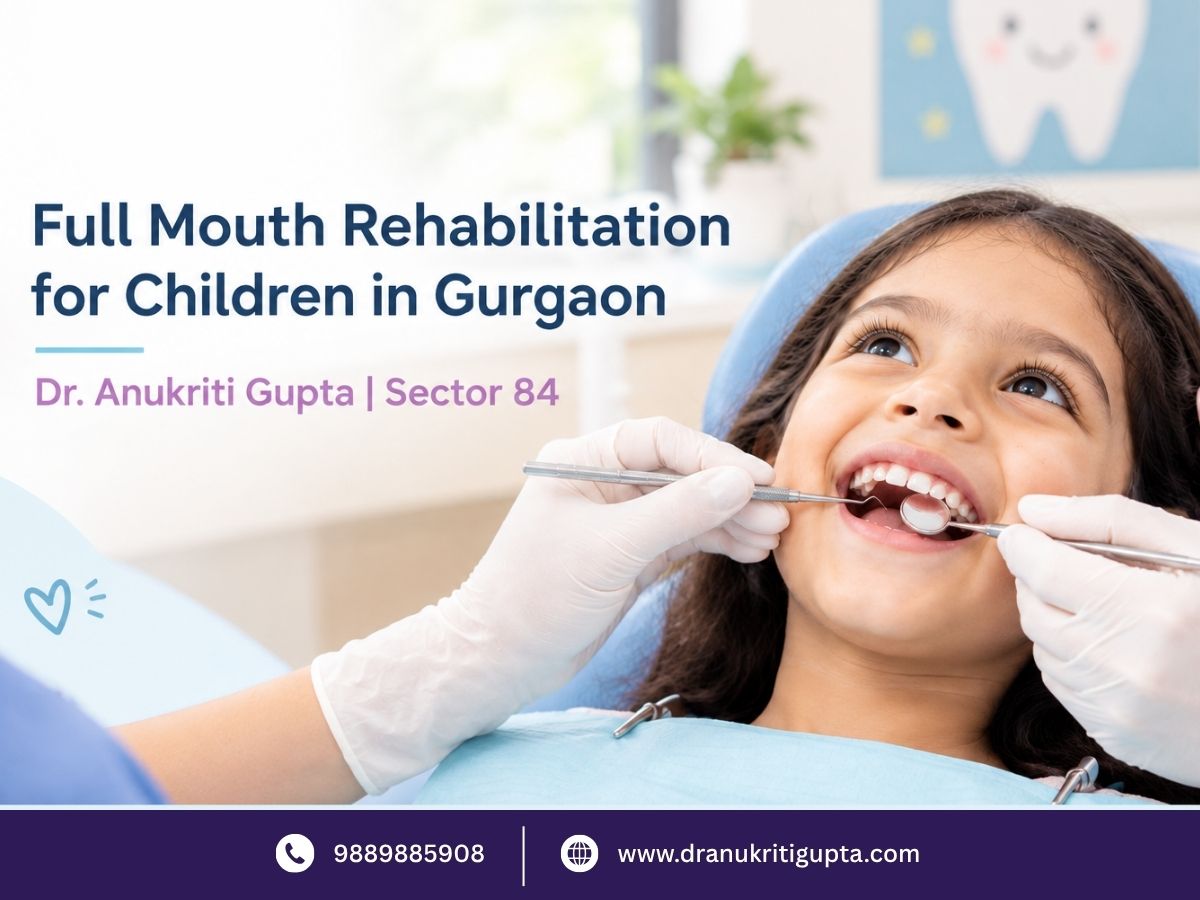
When a child has multiple dental problems at the same time, especially if tooth decay has been left untreated for a long period, treating one dental problem at a time may not always be the most practical approach. In such cases, a paediatric dentist may recommend full mouth rehabilitation for children to assess and address the child’s overall dental needs in a coordinated manner. For parents looking for paediatric dental care in Sector 84, Gurgaon, understanding what full mouth rehabilitation involves can make the treatment process feel much less overwhelming. Full mouth rehabilitation for children is a comprehensive dental treatment plan designed to treat multiple dental problems in a child’s mouth. It is not a single dental procedure. Instead, it may involve a combination of treatments planned according to the child’s age, dental condition, tooth development stage, and ability to cooperate during treatment. The treatment plan is different for every child. While some children may need only a few restorative procedures, others with more extensive dental problems may require several treatments. Full mouth rehabilitation is generally considered when a child has several dental problems that need to be addressed as part of one comprehensive treatment plan. Some common situations may include: Children with cavities in several teeth may require multiple fillings, pulp treatments, or crowns. When tooth decay has affected many teeth, treating each problem separately may not address the child’s overall dental needs. Deep tooth decay can reach the inner part of a tooth and cause infection, swelling or pain. When several teeth are affected, a comprehensive treatment plan may be required to restore oral health. Baby teeth are temporary, but they still play an important role in a child’s chewing, speech, and proper development of permanent teeth. When several baby teeth are badly damaged, restoring them may be important rather than simply waiting for them to fall out. Teeth can be damaged by falls, accidents, or other forms of trauma. When multiple teeth are affected, a full evaluation helps determine the appropriate treatment for each tooth. There is no fixed set of treatments that every child needs during full mouth rehabilitation. The treatment plan depends on the child’s dental examination and overall oral health. Depending on the child’s needs, treatment may include: Small to moderate cavities can usually be treated with dental fillings. Treating decay early can help prevent it from progressing into deeper parts of the tooth. When decay reaches the pulp of a baby tooth, pulp therapy may be needed. Depending on the condition, this may include procedures such as a pulpotomy or pulpectomy. The goal is to manage infection or inflammation while preserving the tooth when it can be safely restored. A severely damaged baby tooth may require a dental crown when a filling is not enough to protect and strengthen the remaining tooth. Crowns can help restore the tooth’s function and protect it from further damage. Sometimes a severely damaged or infected tooth cannot be restored. In such cases, tooth extraction may be considered. If a baby tooth is lost prematurely, the paediatric dentist may also consider whether a space maintainer is required. Baby teeth help preserve the space required for permanent teeth. If a primary tooth is lost too early, space maintainers for children may sometimes be recommended to help preserve the space until the permanent tooth is ready to come in. Full mouth rehabilitation is not only about treating existing dental problems. Preventive care is also important to help reduce the chances of new cavities. Depending on the child’s needs, this may include fluoride treatment, dental sealants, brushing guidance, dietary advice, and regular dental check-ups. Not every child who needs full mouth rehabilitation requires general anesthesia. The decision depends on several factors, including: For some children, especially those who need several complex procedures or are unable to cooperate with conventional dental treatment, completing the required treatment under general anesthesia may be considered. Dr. Anukriti Gupta provides paediatric dental care and full mouth rehabilitation under general anaesthesia. The most suitable approach is decided after a detailed evaluation of the child’s dental and overall health needs. The process generally starts with a detailed dental examination of the child’s teeth, gums, bite, dental development, and areas of concern. Dental X-rays may be recommended when needed to understand the problems that cannot be fully seen during a clinical examination. The paediatric dentist will consider: Not every tooth will require the same treatment. Some teeth may need fillings, while others may need pulp therapy, crowns, or extraction. Whenever safe and appropriate, preserving the natural teeth is preferred. The dentist will assess whether each affected tooth can be treated and restored. Some dental problems may need to be treated before others. For example, pain or infection may need to be addressed first before other restorative procedures. The dentist will discuss suitable behaviour-management and anaesthesia options based on the child’s age, treatment needs, anxiety level, and ability to cooperate. Full mouth rehabilitation does not end when the dental treatment is completed. Long-term prevention is an important part of rehabilitation. Parents and children will receive guidance on brushing, diet, regular dental check-ups, and other ways to lower the chances of new cavities. After full mouth rehabilitation, maintaining good oral hygiene is essential for protecting your child’s teeth and reducing the risk of new dental problems. Parents can help by: Good daily habits, along with regular dental visits, can help identify dental problems early and reduce the chances of more extensive treatment in the future. Consider scheduling a dental evaluation if your child has: Parents should not wait for severe pain before seeking a dental evaluation. Some dental problems can progress without causing obvious symptoms, which is why regular dental check-ups with Dr. Anukriti Gupta, kids dentist in Gurgaon are important for children. When a child has multiple cavities, damaged teeth, dental infections, or several teeth that need treatment, a comprehensive paediatric dental evaluation helps determine the most appropriate course of care. Full mouth rehabilitation is tailored to each child’s dental needs rather than using the same treatment for every child. Dr. Anukriti Gupta provides specialized paediatric dental care in Gurgaon, including full mouth rehabilitation under general anaesthesia when appropriate. Her approach focuses on assessing the child’s overall oral health, identifying which teeth need treatment, preserving healthy tooth structure wherever possible, and choosing a suitable treatment based on the child’s age, dental needs, and ability to cooperate. If your child has multiple dental problems or requires extensive dental treatment, an early consultation with Dr. Anukriti Gupta can help prevent the condition from becoming more complicated. Schedule a consultation with Dr. Anukriti Gupta in Sector 84, Gurgaon, to understand your child’s dental condition and discuss an appropriate treatment plan suited to their needs. What is Full Mouth Rehabilitation for Children?
When Might a Child Need Full Mouth Rehabilitation?
1. Multiple Cavities
2. Multiple Infected or Painful Teeth
3. Severely Damaged Baby Teeth
4. Damaged or Broken Teeth
What Treatments Can Be Part of Full Mouth Rehabilitation?
1. Dental Fillings
2. Pulp Therapy
3. Dental Crowns
4. Tooth Extraction
5. Space Maintainers
6. Preventive Dental Treatments
Is General Anesthesia Needed for Full Mouth Rehabilitation in Children?
What Happens During a Full Mouth Rehabilitation Assessment?
1. Which Teeth Need Treatment
2. Which Teeth Can Be Preserved
3. The Order of Treatment
4. How Treatment Can Be Delivered Comfortably
5. Preventive Care After Treatment
How Can Prevents Help Prevent Extensive Dental Problems?
When Should You Consult a Pediatric Dentist?
Consult with Dr. Anukriti Gupta in Gurgaon for Full Mouth Rehabilitation