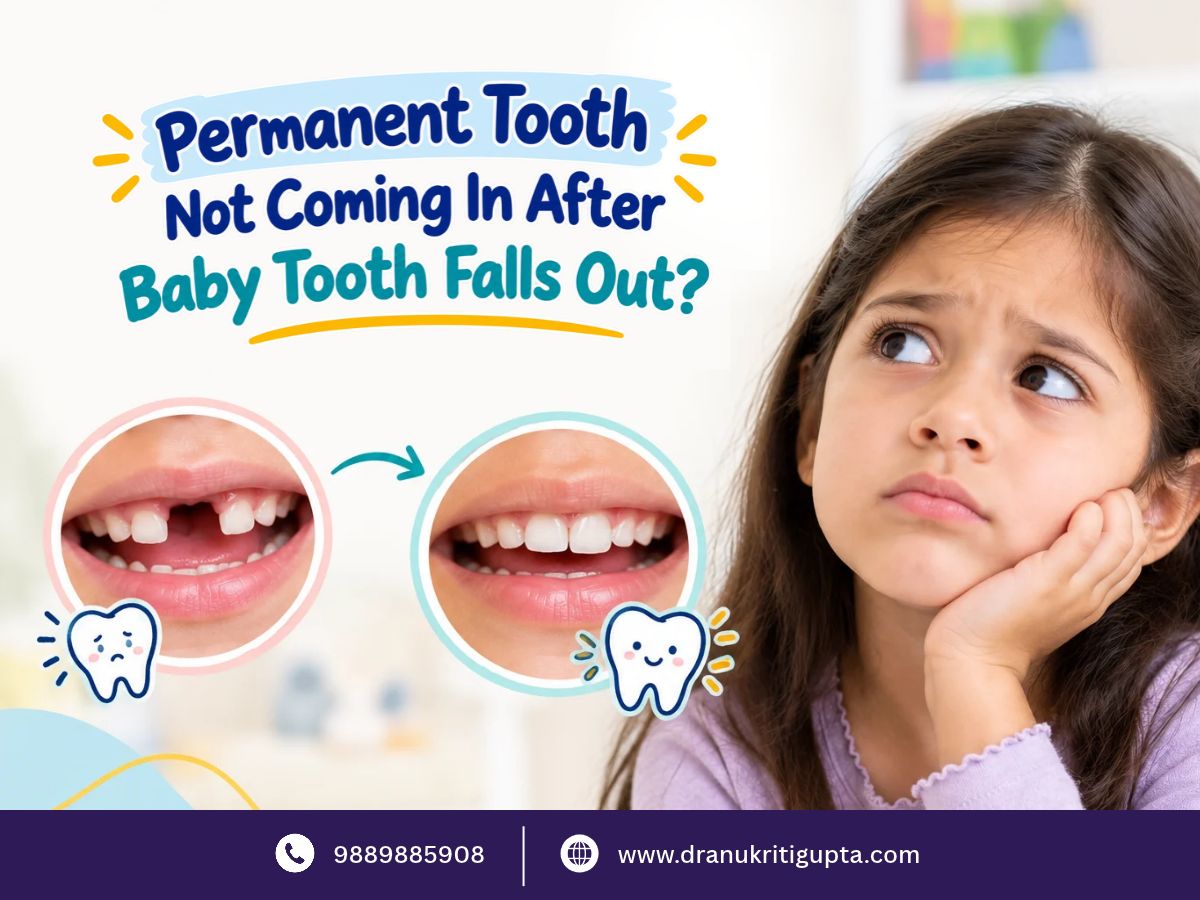
Has your child lost a baby tooth, but the permanent tooth hasn’t appeared yet? It’s natural for parents to wonder whether something is wrong when a gap remains after a baby tooth falls out. In many cases, a permanent tooth takes some time to erupt, and a short delay may not be a cause for concern. However, if there is a noticeable delay or other signs such as swelling, pain, or unusual tooth positioning, it may be worth having your child evaluated by a pediatric dentist. Here’s what parents should know about delayed permanent tooth eruption and when to get it checked. Children lose their baby teeth at different ages, depending on the tooth and their individual development. Permanent teeth don’t always appear immediately after a baby tooth falls out. The timing can vary based on factors such as the child’s dental development, available space in the mouth, and the position of the developing permanent tooth. Sometimes, a permanent tooth may begin appearing relatively soon after the baby tooth is lost. In other cases, it can take longer. What matters is the overall eruption pattern and whether the tooth is developing and positioned normally. Why Is the Permanent Tooth Not Coming In? There are several possible reasons why a permanent tooth may take longer to erupt. Children don’t all lose baby teeth or develop permanent teeth at exactly the same age. Some variation in eruption timing is completely normal. If your child’s other teeth are developing normally and there are no concerning symptoms, the dentist may recommend monitoring the tooth. Crowding can make it difficult for a permanent tooth to follow its normal path of eruption. If the surrounding teeth have moved into the available space after a baby tooth is lost, the developing tooth may have less room to erupt. Sometimes, a permanent tooth develops at an unusual angle or in a position that makes normal eruption more difficult. In these situations, a dental examination can help determine whether the tooth is likely to erupt naturally or requires further monitoring. Baby teeth help maintain space for permanent teeth. If a baby tooth is lost too early because of decay, trauma, or another dental problem, nearby teeth may shift into the empty space. In some cases, space maintainers may be recommended to help preserve the space needed for the developing permanent tooth. Occasionally, an additional tooth can interfere with the normal eruption of a permanent tooth. A dental X-ray, when clinically appropriate, can help determine what is happening below the gums and whether something may be blocking the tooth. An impacted tooth is one that is unable to erupt normally into the mouth. This can happen when the tooth does not have enough space or is positioned in a way that prevents normal eruption. A delayed permanent tooth does not automatically mean there is a problem. However, parents should consider consulting a pediatric dentist if: If you’re unsure whether your child’s tooth is taking too long to appear, a pediatric dental examination can assess your child’s individual eruption pattern rather than relying only on general age guidelines. Sometimes parents notice a permanent tooth appearing behind a baby tooth instead of directly underneath it. This can look unusual and is sometimes referred to as “shark teeth.” In many children, the baby tooth becomes loose and eventually falls out, allowing the permanent tooth to move towards its normal position. However, the situation should be evaluated if the baby tooth remains firmly in place or if the permanent tooth does not move into a normal position. You can learn more about this situation in our guide: Permanent Tooth Growing Behind Baby Tooth This article explains why a permanent tooth may appear behind a baby tooth and what parents should watch for. Treatment depends on the reason for the delayed eruption. If the tooth is developing normally and there are no signs of obstruction, the dentist may recommend simply monitoring its progress. If there is a lack of space, an impacted tooth, an obstruction, or another dental issue, treatment may be needed. Depending on the situation, this could involve preserving or creating space, addressing an obstruction, or coordinating further dental care. Early evaluation can be useful because some eruption problems are easier to manage when identified at the right stage of dental development. If your child’s baby tooth has fallen out and the permanent tooth hasn’t appeared yet, try not to panic immediately. Tooth eruption varies from child to child. However, if the delay seems unusual, one side is developing very differently from the other, or you notice pain, swelling, crowding, or an unusual tooth position, consider scheduling a dental evaluation with Dr. Anukriti Gupta. We will check your child’s eruption pattern and help determine whether the tooth simply needs more time or whether further evaluation is appropriate. Permanent teeth can appear within a few weeks to several months after a baby tooth falls out. The timing varies depending on the tooth and the child’s individual development. A delay does not always indicate a problem. However, if a permanent tooth remains absent for a prolonged period, especially when the matching tooth has already erupted, consult a pediatric dentist. A permanent tooth may be delayed due to lack of space, an unusual position, an obstruction, or impaction. The appropriate treatment depends on the underlying cause. Not necessarily. Permanent teeth don’t always erupt at the same time. However, a significant difference between the two sides, a dental evaluation can help determine whether further assessment is needed. Yes, in some cases. Losing a baby tooth too early can allow nearby teeth to shift into the space needed by the permanent tooth. A pediatric dentist can assess whether the space needs to be monitored or maintained. If your child’s permanent tooth is taking longer than expected to appear, you don’t necessarily need to be alarmed. But if you have concerns about delayed eruption, unusual tooth positioning, crowding, or a baby tooth that was lost early, a professional evaluation can help you understand what is happening. Dr. Anukriti Gupta, Pediatric Dentist in Gurgaon, provides child-friendly dental care to assess tooth development, eruption patterns, and other dental concerns in children. If you’re concerned about your child’s permanent tooth not coming in, schedule a consultation to have their dental development evaluated. How Long Does It Takes for a Permanent Tooth to Come In?
1. Normal Variation in Tooth Eruption
2. Not Enough Space for the Permanent Tooth
3. The Tooth Is Developing in an Unusual Position
4. The Baby Tooth Was Lost Too Early
5. An Extra Tooth May Be Blocking the Permanent Tooth
6. The Permanent Tooth May Be Impacted
When Should Parents Be Concerned?
What If the Permanent Tooth Grows Behind Another Tooth?
Can a Delayed Permanent Tooth Be Treated?
What Should Parents Do If Their Child’s Permanent Tooth Isn’t Coming In?
Frequently Asked Questions
Q1. How long after a baby tooth falls out should the permanent tooth come in?
Q2. When should I worry about permanent teeth not coming in?
Q3. What happens if a permanent tooth does not erupt?
Q4. Should I worry if one permanent tooth comes in before the other?
Q5. Can losing a baby tooth too early affect permanent teeth?
Concerned About Your Child’s Permanent Tooth Not Coming IN?