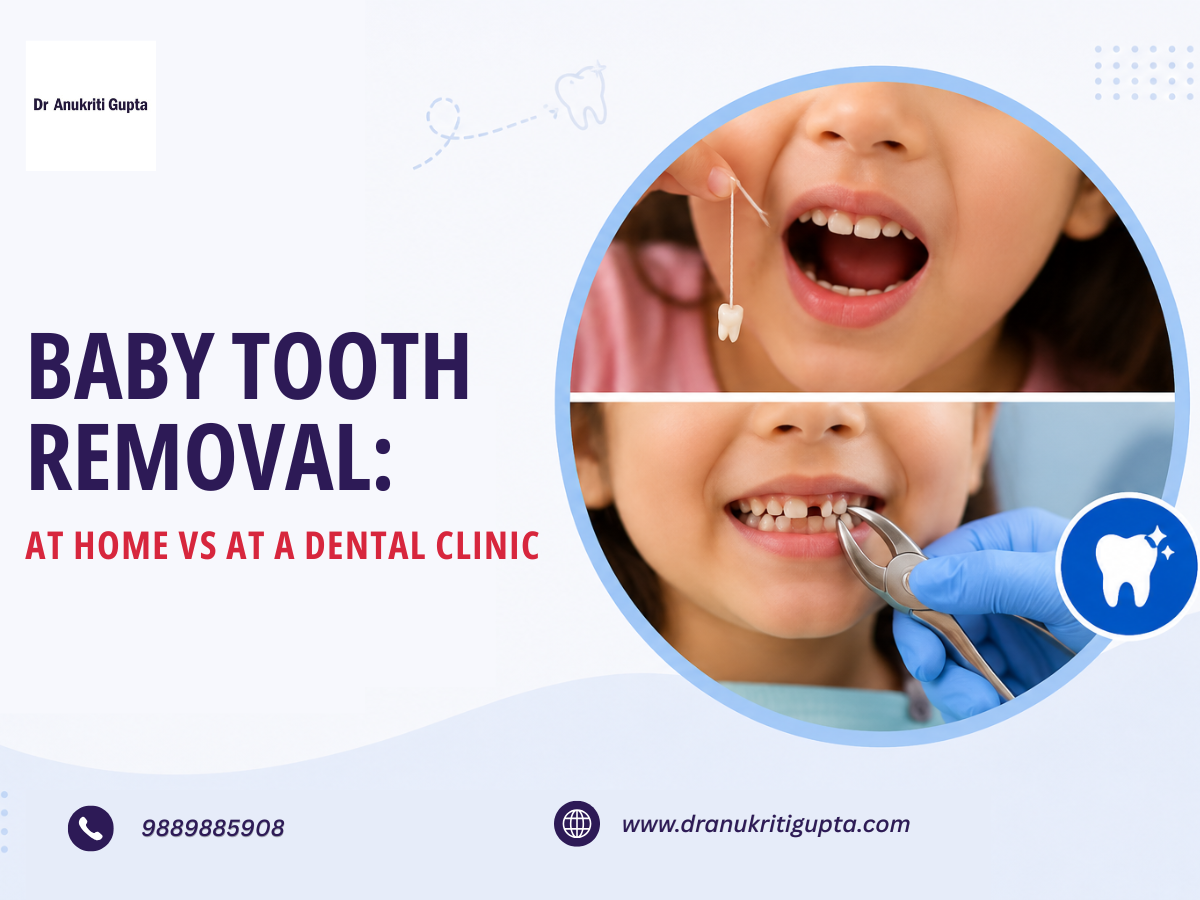
Most parents have done it at some point, tying a string around a wobbly tooth, or telling their child to “just wiggle it out.” Pulling a baby tooth at home feels harmless, even nostalgic. The direct answer is this: pulling a baby tooth at home is safe only if the tooth is already naturally loose and ready to fall out on its own. Otherwise, it can cause infection, broken roots, or damage to the permanent tooth underneath. A loose milk tooth that’s hanging by a thread is very different from a tooth that’s still firmly rooted but causing pain or decay. The risk depends entirely on why the tooth is loose in the first place, not just whether it wiggles. This is the distinction most parents never get told, and it’s exactly what decides whether home removal is fine or genuinely dangerous. Baby teeth loosen naturally when the permanent tooth underneath pushes up and dissolves the primary tooth’s root, a process called root resorption. This is a completely normal, healthy part of childhood development, usually happening between ages 5 and 12 depending on the tooth. But a tooth can also become loose for unhealthy reasons, such as gum infection, trauma from a fall, or advanced decay that has weakened the supporting bone. In these cases, the tooth is unstable not because it’s ready to come out, but because something is wrong underneath. Pulling it at home in this scenario can leave behind infected tissue or a fractured root fragment. This is why a wobble alone isn’t enough information to decide. The early signs of tooth decay in kids are often what’s really driving the looseness, and that needs a dentist’s evaluation, not a string and a doorknob. Pulling a tooth before it’s naturally ready can fracture the root, leave fragments in the gum, cause infection, or disturb the developing permanent tooth, sometimes leading to misalignment. A child’s jaw is still forming, and the space a baby tooth holds matters more than most parents realise. If a tooth is extracted, whether at home or due to severe decay, significantly before its natural exfoliation time, neighbouring teeth can drift into the empty space. When the permanent tooth is finally ready to erupt, there may not be enough room left for it. This is exactly why dentists often recommend a space maintainer after early tooth loss — it holds the gap open until the adult tooth is ready. A dental clinic removal is controlled, sterile, and pain-managed, while home removal carries real risk of infection, root fracture, and incomplete extraction, even when the tooth looks ready. This comparison is exactly why most pediatric dentists recommend in-clinic removal for anything beyond a tooth that’s already detached or hanging by the thinnest thread of tissue. It’s safe to let a tooth come out at home only when it’s extremely loose, not painful, not infected, and close to falling out on its own. Gentle wiggling with clean fingers is acceptable in this specific case. If your child’s tooth meets all of the following, home removal is generally low-risk: If even one of these isn’t true, it’s worth a quick check rather than forcing it. A tooth needs professional removal if it’s loose due to decay, infection, or trauma rather than natural development. Signs include pain, swelling, pus, discolouration, or a tooth that’s loose but not moving toward falling out. If you notice any of these signs, this is no longer a “let it happen naturally” situation. It has crossed into a dental emergency that needs same-day attention. A persistent ache especially at night can also be a sign worth addressing immediately — read more on managing a child’s toothache at night while you arrange a visit. A small amount of bleeding is normal. Heavy or prolonged bleeding beyond 10–15 minutes needs a dentist’s attention immediately. Yes. Early removal can cause neighbouring teeth to shift, leaving insufficient space for the permanent tooth to erupt correctly. Take your child to a paediatric dentist promptly. Retained root fragments can cause infection if left untreated. Not always — many naturally loose teeth are removed without anaesthesia. It’s used only when the tooth is still firmly attached or the child is anxious. Not immediately, but it’s worth a dental check. Some teeth take longer, while others may be stuck due to a misaligned permanent tooth underneath. A loose tooth that’s truly ready to come out rarely needs intervention. Your child’s body manages it naturally. But the moment there’s pain, infection, unusual delay, or any doubt, pulling it yourself stops being a harmless tradition and becomes a real risk to your child’s permanent teeth. If your child has a loose tooth that’s causing pain, swelling, or simply won’t come out, book a quick, painless tooth evaluation with Dr. Anukriti Gupta. With gentle, child-first care at clinics in Sector 84 (Elan Miracle Mall) and Sector 102 (Satya The Hive, Dwarka Expressway), she ensures every extraction, whether assisted or natural, happens safely and without unnecessary trauma for your child. Book a painless tooth removal consultation →Why Do Baby Teeth Become Loose in the First Place?
What Actually Happens If You Pull a Baby Tooth Too Early?
Home Removal vs Clinic Removal: A Direct Comparison
Factor
Pulling at Home
Removal at a Dental Clinic
Pain control
None. The child feels the full sensation.
Local anaesthesia available if needed
Infection risk
High. No sterile instruments are used.
Minimal. Sterile, controlled environment.
Root fragments left behind
Common, often unnoticed
Checked and removed completely
Bleeding control
Unpredictable, can be excessive
Managed immediately with proper technique
Impact on permanent tooth
Risk of misalignment if too early
Dentist evaluates timing and recommends a space maintainer if needed
Emotional experience for child
Can be frightening, builds dental fear
Gentle, controlled, reduces future anxiety
X-ray check beforehand
Not possible
Confirms tooth is genuinely ready to come out
When Is It Actually Fine to Let a Tooth Fall Out at Home?
How Can Parents Tell If a Loose Tooth Needs Professional Removal?
Frequently Asked Questions
Is it normal for a baby tooth to bleed a lot when it comes out?
Can pulling a tooth too early affect the permanent tooth coming in?
What should I do if part of the tooth root breaks off during home removal?
Is local anaesthesia necessary for removing a baby tooth at a clinic?
My child’s tooth has been loose for a month and won’t come out — should I worry?
Conclusion: When in Doubt, Let a Professional Decide
📞 Sector 84: +91-9889885908 | Sector 102: +91-9289847779